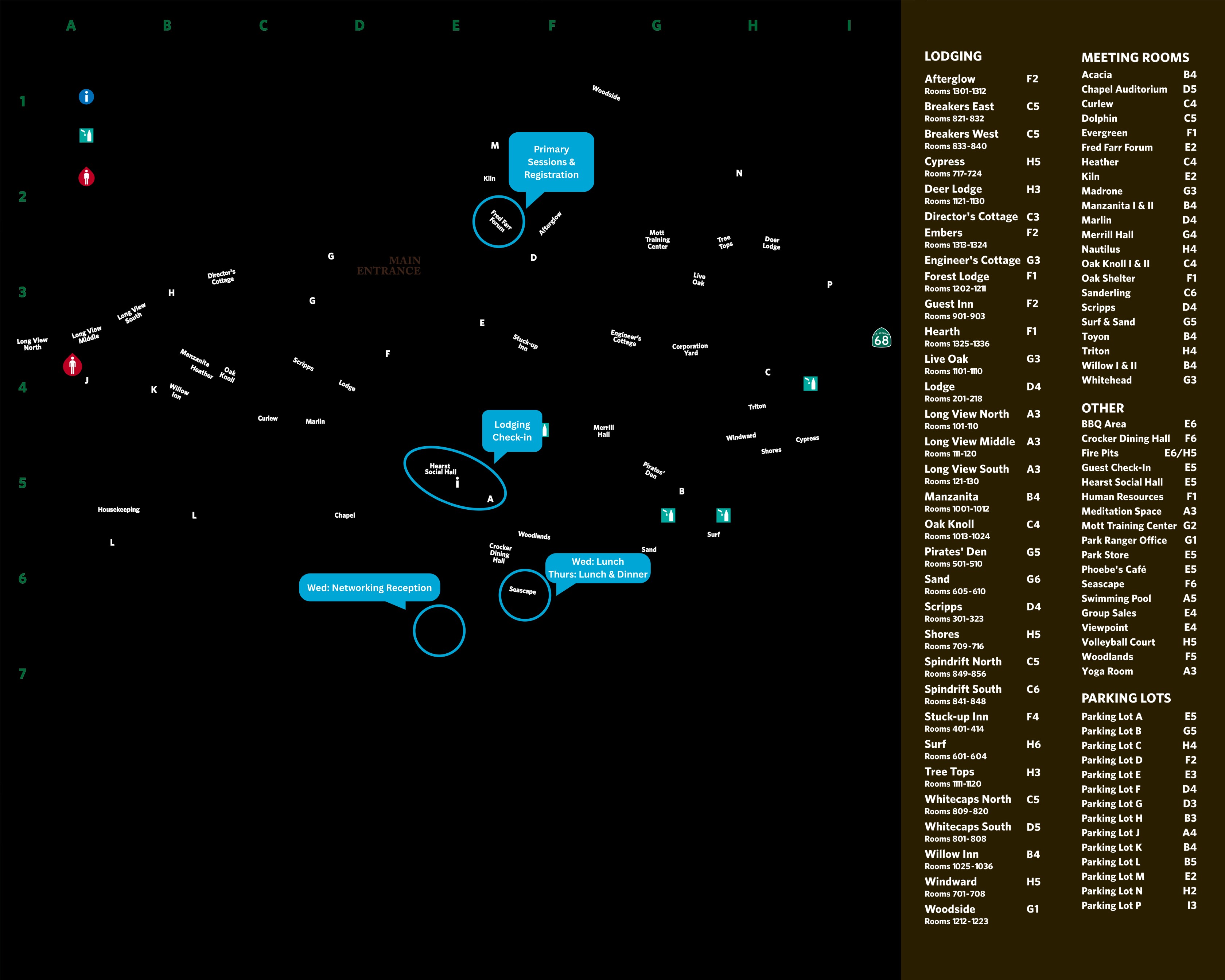
The IIFH Partner Summit 2026: Signals and Strategy in Food & Health — Technology and Investment will take place May 13–14, 2026, with a welcome dinner on the evening of May 12 at the historic Asilomar Conference Grounds, a venue long recognized for hosting consequential scientific convenings—including the landmark 1975 meeting that helped shape the trajectory of modern biotechnology.
Designed as an invitation-only, retreat-style convening, the Summit brings together IIFH partners with senior leaders across academia, industry, investment, and philanthropy to examine the signals shaping food and health systems. Rather than predicting a single future, the program explores signals that may presage a range of possible outcomes, pairing use-inspired research with focused discussion on strategic, commercial, and capital allocation implications.
By leveraging Asilomar’s legacy as a place for reflection at moments of emerging capabilities, the Partner Summit supports informed judgment and long-term decision-making—allowing each organization to interpret how evolving scientific and market dynamics shape its own strategic path.
For more information, contact [email protected].
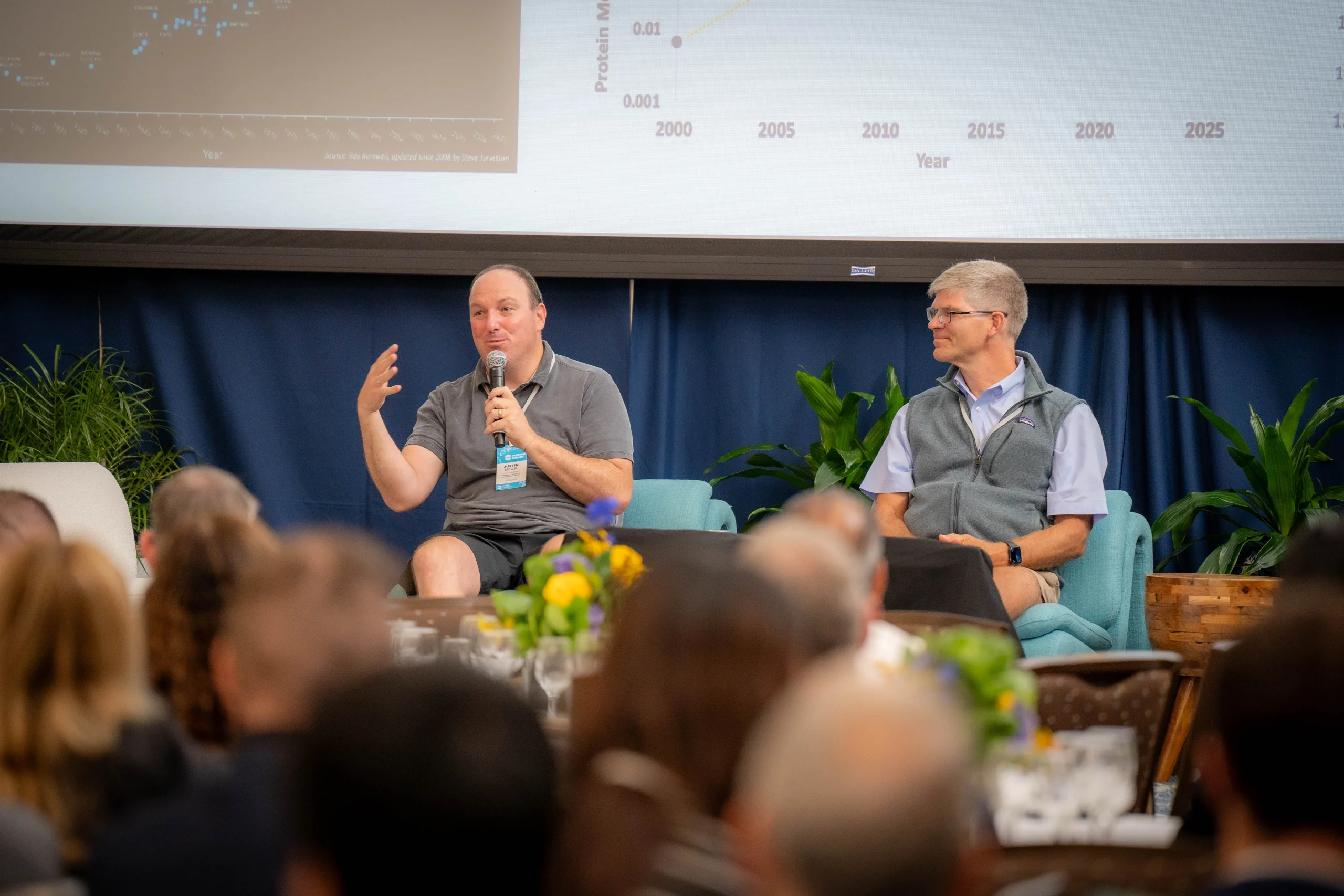
Justin Siegel and Mark Friedman will open the Summit with brief remarks reflecting on the role of UC Davis and its partners, at this moment in food and health—and the opportunity to translate emerging science into real-world impact. Reception-style dinner will be served.
Mary Croughan | Provost, UC Davis
Justin Siegel, PhD | Faculty Director, Innovation Institute for Food and Health
Justin Siegel will open the Summit by framing the shifts underway across food and health, drawing on recent breakthroughs and market forces reshaping the sector. With a focus on advances in protein science, he will highlight what these changes make possible and set context for the discussions ahead.
William Morice | CEO, Mayo Clinic Labs
William Morice looks at how advances in molecular testing are enabling better patient characterization, treatment optimization, and addressing emerging gaps across medical and lifestyle contexts.
Moderator: Harold Schmitz | Founding Partner, The March Group
Panelists:
This panel examines how GLP-1 adoption and emerging diagnostics may reshape food demand, product design, and consumer behavior over the next decade. The discussion will highlight early changes in dietary patterns, emerging opportunities across food, diagnostics, and services, and key unknowns—from disrupted food product categories to potential nutrition risks.
Justin Siegel | IIFH Faculty Director
Small-group experiences designed to extend conversations and create space for connection in a more informal setting.
George Baxter | Chief Innovation and Economic Development Officer, UC Davis
Bernhard Palsson| Director & Principal Investigator, University of California, San Diego
Bernhard Palsson explores the outer boundaries of biotechnology—what is achievable, what may remain out of reach, and where momentum is real versus overstated. He will consider what will be required to keep the sector both credible and vibrant.
Morten Sommer | Professor, Technical University of Denmark
Morten Sommer offers a candid look at the current state of research in microbial systems—from medical applications to the production of food and food ingredients. He will highlight key successes to date, the challenges in this stream of inquiry, and how this research is shaping approaches to new product development.
Moderator: Steve Chamow | Principal Consultant, Alira Health
Panelist:
The rise of modern biotechnology reflects more than scientific progress—it reflects intentional ecosystem design. This discussion examines the structural lessons most relevant to food innovation. Drawing on insights from leading biotech regions and industry builders, panelists will examine how scientific discovery translates into sustained commercial advantage.
Justin Siegel | Faculty Director, IIFH
Designed for conversation and connection with founders and startups advancing translational innovation in food and health. The reception also includes light tastings, and a Periodic Table of Food Initiative touchpoint offering insight into the initiative and its connection to broader research and collaborations.
Abigail Stevenson | Chief Science Officer, Mars
Kim Budil | Director, Lawrence Livermore National Laboratory
Advances in high-performance computing and AI are reshaping health innovation, particularly in drug discovery and biological modeling. Director Budil will highlight how large-scale computational infrastructure enables these breakthroughs. As food innovation increasingly moves toward precision nutrition and biologically informed product design, this session offers a lens for understanding what comparable computational capabilities may be required to support AI-enabled discovery at scale.
Carlito Lebrilla | Distinguished Professor, UC Davis Chemistry
Carlito Lebrilla will discuss how AI-driven analytical technologies are enabling a more comprehensive understanding of the molecular composition of food. These cutting-edge capabilities are opening the door to a new generation of diagnostic tools that illuminate how our bodies interact with the food we eat—and how those insights can shape future innovation in food and health.
Moderator: Tom Andriola |Principal, Digital Squared
Panelists:
This panel examines where artificial intelligence is already changing food innovation workflows—and what conditions must be in place for AI to drive more fundamental transformation across the sector.
Justin Siegel | Faculty Director, IIFH
Small-group experiences designed to extend conversations and create space for connection in a more informal setting.
Rao Unnava | Dean, UC Davis Graduate School of Management
Irina Adler | Managing Director, Canaccord Genuity / CG Sawaya Partners
As consumer health evolves, M&A has become a key mechanism for scaling differentiated products and shaping long-term strategy. This session examines how strategic and financial buyers evaluate assets today—looking beyond growth to assess scientific credibility, brand trust, and scalability. Drawing on recent transactions, the discussion highlights the product and brand attributes that attract capital and how buyer priorities are shifting as the boundaries between food, supplements, and health continue to blur.
Moderator: Rao Unnava | Dean, UC Davis Graduate School of Management
Panelist:
This panel examines whether traditional venture capital models are aligned with the timelines, risk profiles, and capital requirements of food system innovation—and how emerging capabilities such as AI could reshape how food technologies are de-risked, scaled, and financed.
Justin Siegel | Faculty Director, IIFH
Peter Badge | CEO & Artist, Science.now
Inspirational closing session and learnings from over 20-years of direct engagement with the world’s most celebrated scientists who have carried out breakthrough research that has translated into lasting impact on the world – either transforming or creating entirely new commercial sectors.
The nearest airport is Monterey Regional (MRY), approximately 15 minutes from Asilomar. San Jose (SJC) and San Francisco (SFO) are also accessible, approximately 1.5–2 hours by car. Rental cars and rideshare services are available from all airports.
For an alternative to rideshare or rental cars, Groome Transportation (Monterey location) offers scheduled shuttle service to Asilomar from SFO and SJC. With advance booking, door-to-door pickup and drop-off only. Visit their Monterey service page to book and select your preferred drop-off here.