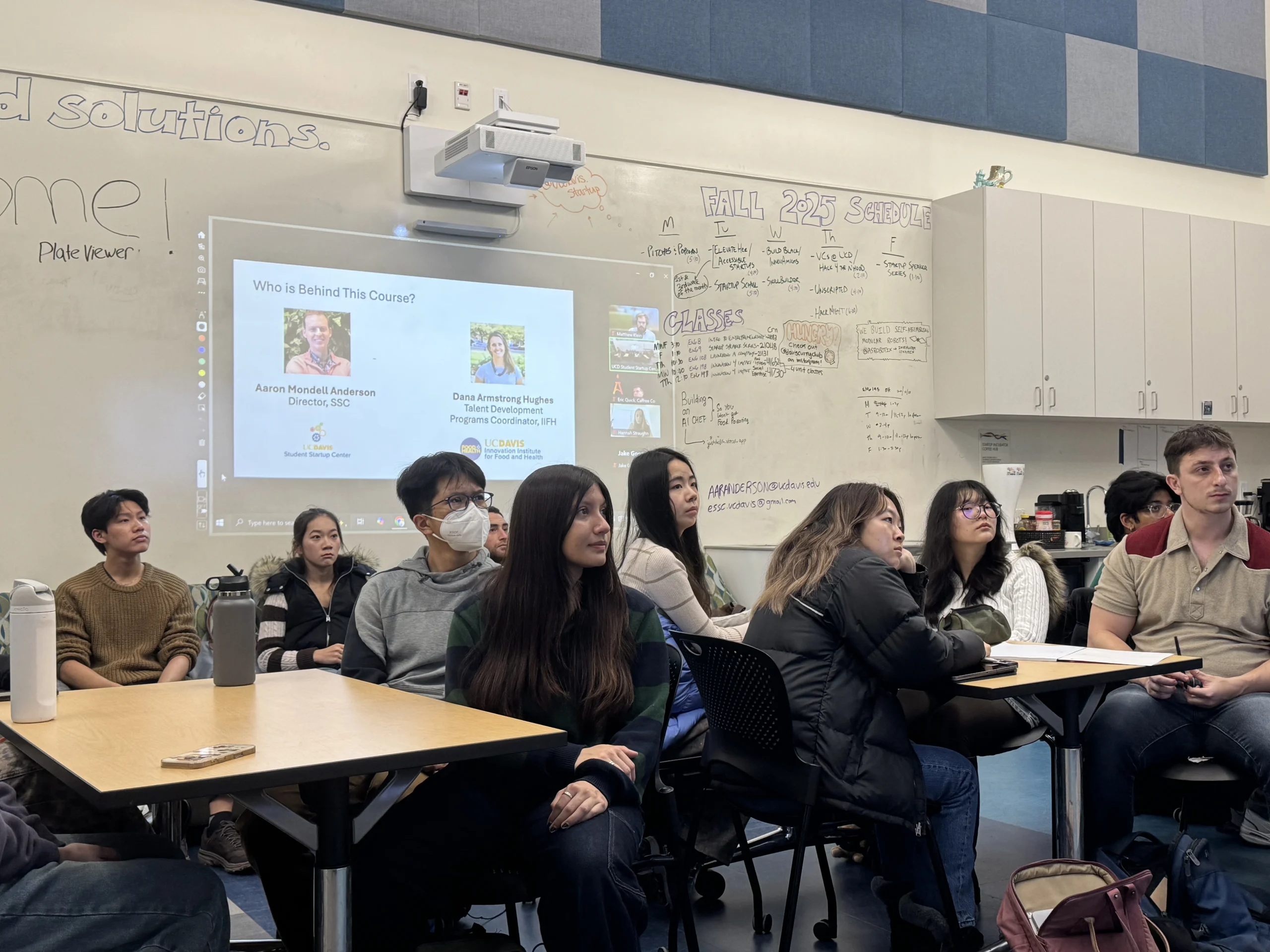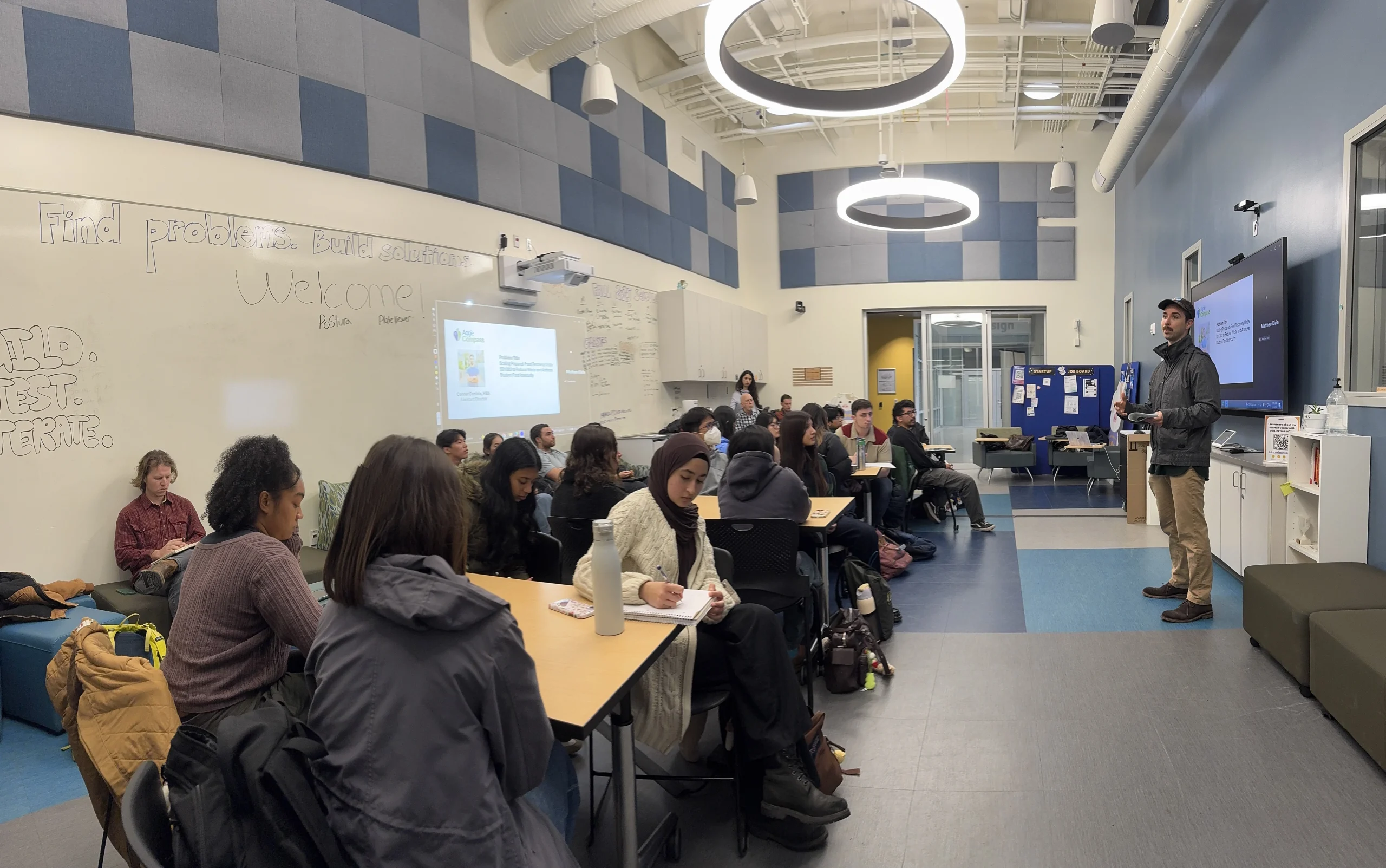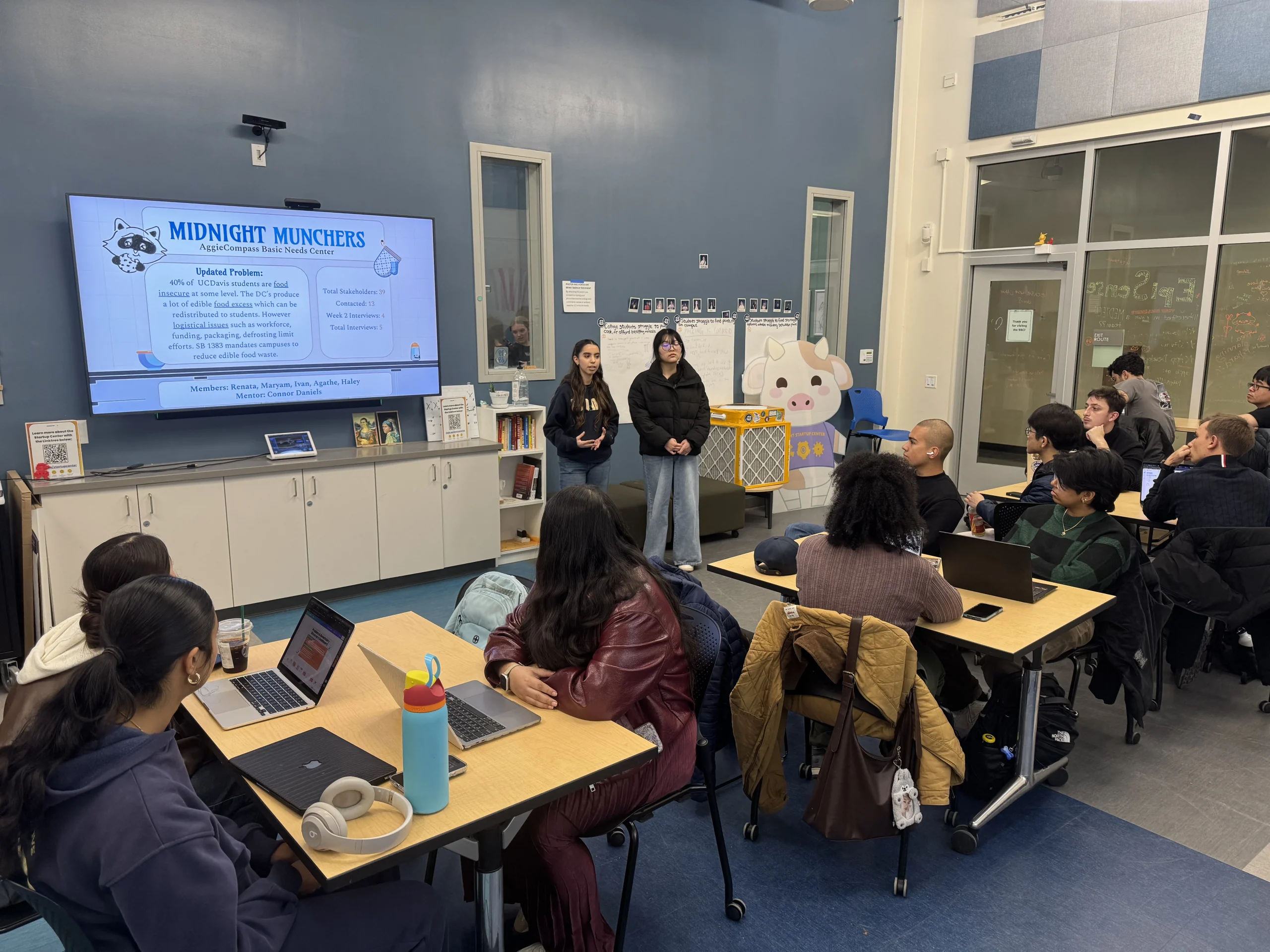
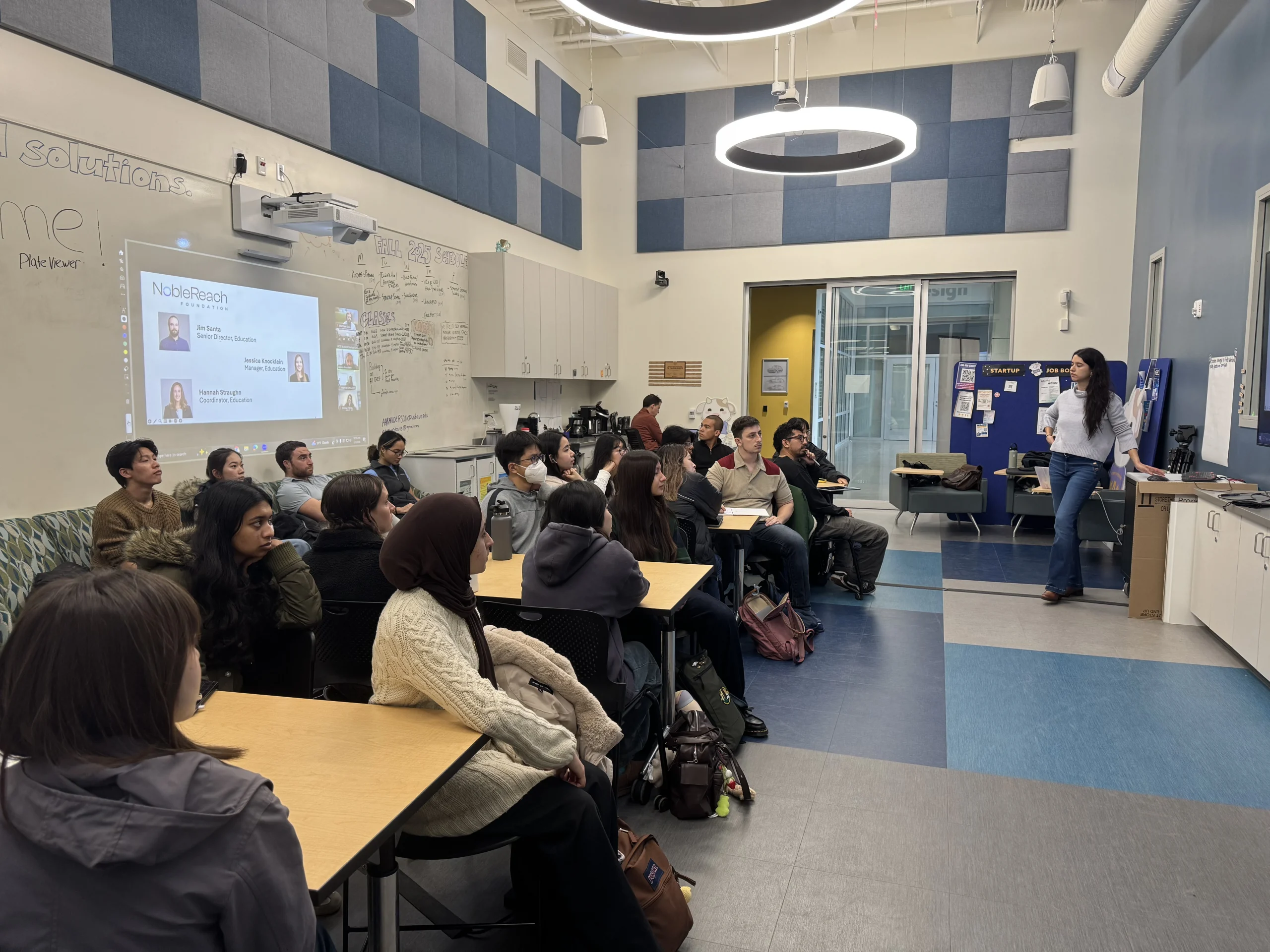
This winter, IIFH is proud to sponsor the inaugural Innovation for Impact: Food Systems class, a hands-on, cross-disciplinary course designed to tackle some of the most urgent challenges in our food system.
Offered in partnership with the Student Startup Center and grounded in the Noblereach Foundation’s Lean Launchpad curriculum, the course follows a flipped-classroom model.
Students from across academic disciplines team up to solve urgent civil, environmental, security, social and technological challenges. In this first Food Systems cohort, projects span anywhere from agricultural supply chains and impact of agricultural practices through to human metabolic health implications of today’s food system.
Known colloquially as “Hacking4Food,” the course is the fourth in the Student Startup Center’s “Hacking4” series, following Hacking4Climate, Hacking4Healthcare, and Hack4theNeighborhood. It represents a powerful synthesis of IIFH’s ecosystem—bringing together fellows, startups, corporate partners, and campus collaborators to mentor the next generation of innovators.
The class is taught by IIFH Technology Transfer Fellow alumna Alice Dien, and all student team is paired with a problem-statement mentor drawn from IIFH partners and startups.
Students, from undergraduate through to PhD students, are working in groups to explore the following challenges:
Throughout the ten-week course, teams define their problem space, iterate on a business model canvas, and conduct more than 30 stakeholder interviews—using those insights to continuously refine both the problem and the proposed solution. By the end of the quarter, each team delivers an MVP and, for some, the foundation of a new venture.
In addition to hands-on project work, speakers from the IIFH ecosystem deliver guest lectures on entrepreneurship and venture development, further embedding students within a thriving innovation network.
The Innovation for Impact: Food Systems class reflects IIFH’s commitment to translating knowledge into action. By connecting students directly with real-world challenges and industry mentors, IIFH is cultivating the next generation of innovators prepared to build scalable, meaningful solutions for a healthier and more sustainable food system.