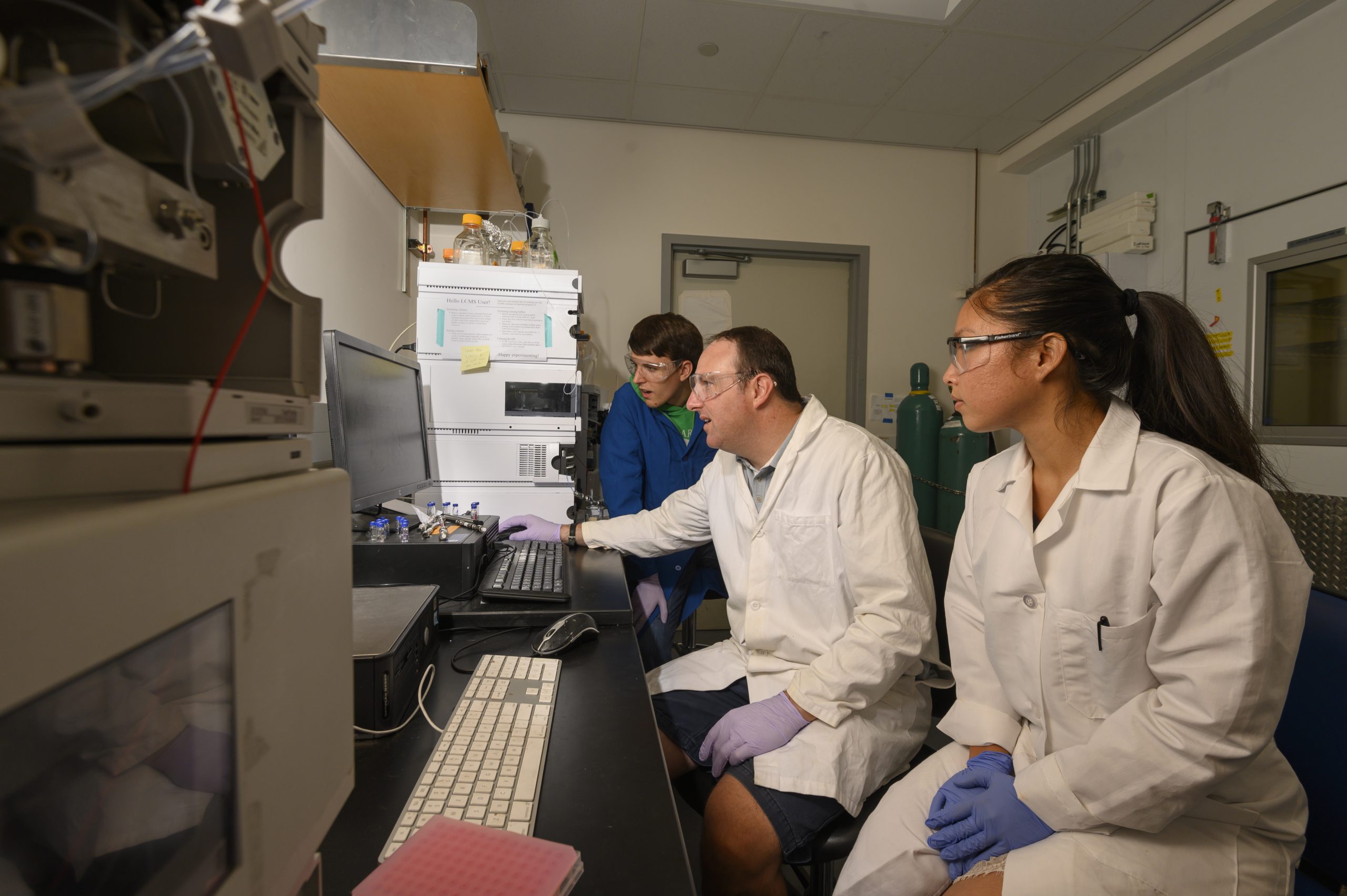
Well before GLP-1–based drugs gained widespread attention, Dr. Bethany Cummings was drawn to a puzzling clinical observation: patients who undergo bariatric surgery often experience dramatic improvements in type 2 diabetes—independent of weight loss.
That insight has guided Dr. Cummings’ research ever since, leading her back to the pancreas, the source of the hormones that keep blood sugar in balance. By studying how this system responds to bariatric surgery and GLP-1–based therapies in humanized mouse models, her lab has helped clarify how metabolic health can improve through coordinated changes in pancreatic hormone secretion.
“What’s been really exciting is realizing how much flexibility exists within hormone-producing systems, and how small shifts in signaling can have major metabolic effects.”
GLP-1 is typically described as a gut-derived hormone released after eating, helping to slow digestion, stimulate insulin secretion, and signal fullness to the brain. But Dr. Cummings’ research has revealed that under certain conditions, the pancreas itself can begin producing GLP-1.
In a Cell Reports study (Cummings et al., 2018), her team showed that bariatric surgery reshapes the behavior of pancreatic alpha cells. These cells typically produce glucagon, the hormone that raises blood sugar and counterbalances insulin. After surgery, however, some alpha cells begin producing GLP-1 locally within the pancreas.
“We were the first to show that bariatric surgery can drive that shift,” she explains. “And we later found (Cummings et al., 2021) that GLP-1 receptor agonist drugs can do the same, even in human pancreatic tissue.”
These findings, reviewed in Frontiers, show that pancreatic cells are more adaptable than previously thought. When GLP-1 is produced locally inside the pancreas, it strengthens communication between neighboring cells, enhancing insulin release and improving blood sugar regulation. By clarifying how GLP-1 operates across tissues, this work provides important insight into the development of more precise and effective therapies.
By examining the pancreatic alpha-cells more closely, Dr. Cummings’ work is also contributing to a more nuanced understanding of glucagon biology. Long viewed primarily as a hormone that raises blood sugar and exacerbates diabetes, glucagon is now recognized as playing more complex, and even beneficial, roles in regulating energy use and overall blood glucose balance
Her research shows that increased GLP-1 production in alpha cells, such as after bariatric surgery or in response to GLP-1–based therapies, does not necessarily reduce glucagon levels. Instead, glucagon can remain active and, importantly, can help stimulate insulin secretion, which is essential for keeping blood sugar levels in a healthy range. These insights help explain why newer multi-agonist drugs that combine metabolic hormones such as GLP-1, GIP, and glucagon may deliver broader and more effective improvements in blood sugar control, further guiding the development of next-generation therapeutics.
More recently, Dr. Cummings’ lab has turned its attention to how nutrients, particularly dietary protein, shape hormone signaling within the pancreatic islet. Her work focuses on alpha cells, which appear to respond strongly to amino acids, the building blocks of protein, and in turn influence both glucagon and insulin release
“We’ve been very glucose-centric for decades,” she notes. “But amino acids are major regulators of hormone secretion, and we still have a lot to learn.”
Her lab is uncovering how specific amino acids shape communication between hormone-producing cells in the pancreas and has found meaningful differences between women and men in how these signals are produced and regulated. These findings raise important questions about sex-specific diabetes risk and whether dietary guidance or treatments may need to be tailored differently for women and men.
Dr. Cummings is an active collaborator with the Innovation Institute for Food and Health (IIFH) and has contributed to interdisciplinary initiatives such as the GLP-1 Discovery Forum. Through these efforts, she engages with researchers, industry partners, and innovators to explore how advances in islet biology and hormone signaling can inform more thoughtful approaches to food innovation, nutrition, and metabolic health.
“As GLP-1–based therapies become more widely used and physiology changes,” she says, “we need to think carefully about how food fits into that context.”
IIFH’s collaboration with Dr. Bethany Cummings reflects a shared commitment to interdisciplinary, science-driven innovation—advancing foundational understanding of metabolism while informing the future of food, nutrition, and human health.