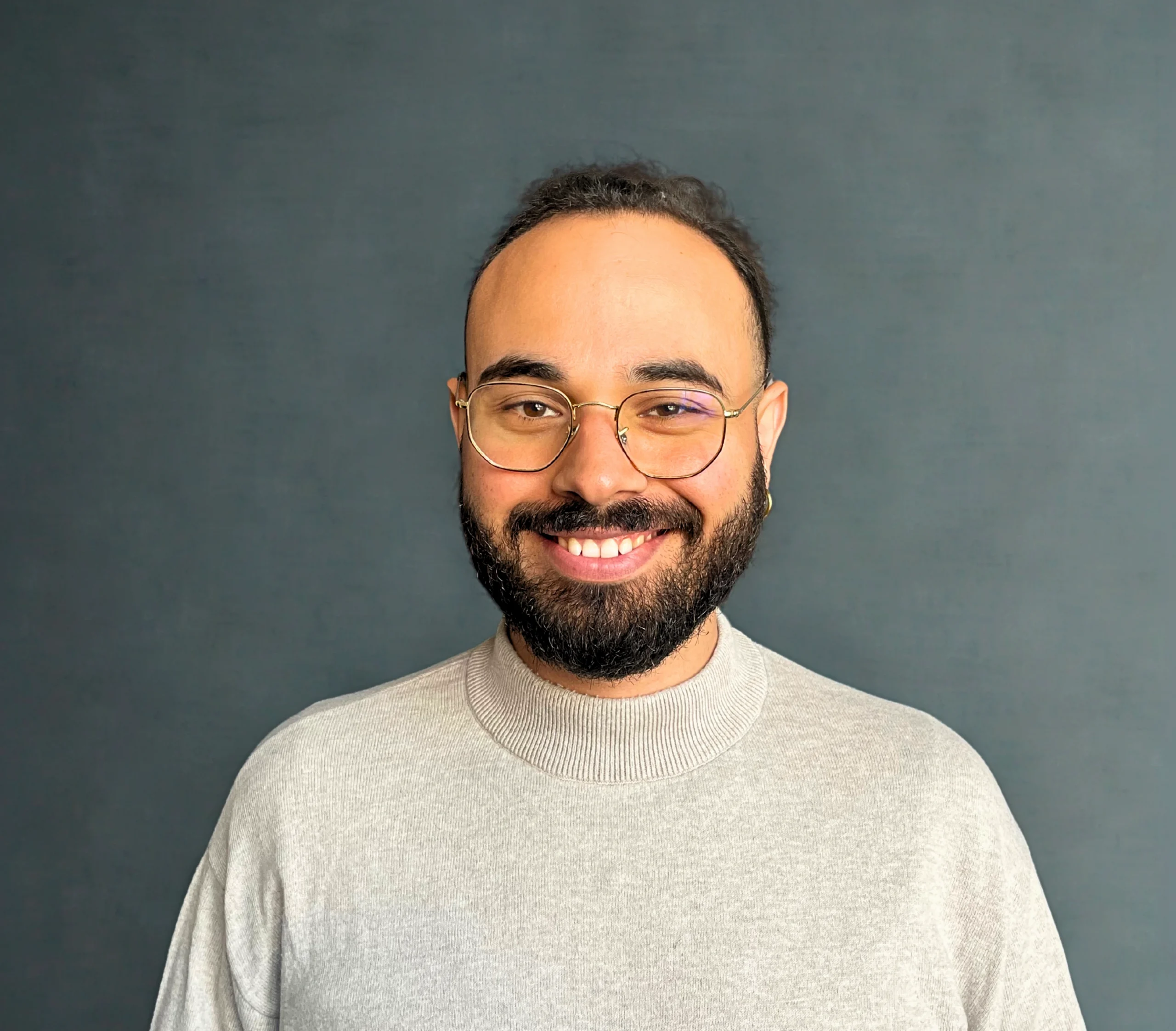
By Samir Hobloss

When I arrived in California for the California–Denmark Innovator Fellowship, I came with almost ten years of experience in academia and research. I knew how to approach a scientific question, design experiments and evaluate evidence. What I understood much less was what happens when science leaves the laboratory.
How do you decide whether an idea has real innovation potential? What makes somebody invest in it? How do you know when to keep developing an idea and when to stop? And how do researchers learn to speak the language of founders, investors and industry?
Over six months, I had the opportunity to start answering those questions.
A different way to evaluate an idea
One of the most valuable parts of the fellowship was working with The March Group. Through company evaluation, due diligence on eight companies, interviews with two founders and investment-related research, I was introduced to a completely different way of looking at ideas. Instead of asking only whether the science was interesting or technically possible, I learned to ask who actually needs the solution, what alternatives already exist, what the major risks are and whether there is a convincing path from technology to market.
I also came to understand venture capital much more deeply. Before the fellowship it was a world I knew mostly from the outside. Meetings with investors, accelerators and entrepreneurs showed me how funding decisions are made, how companies are built stage by stage, and how much weight intellectual property, market positioning and timing really carry.
Another lesson was the importance of narrative. I watched companies with strong technologies struggle to explain why their work mattered, and others define a problem so clearly that the value was obvious to everyone in the room. The science remains essential, but science alone does not communicate value.
The fellowship also gave me a much broader view of the food and health innovation landscape. Together with my fellow Innovator Fellows, Emma Hoch-Schneider and Pedro Martinez Noguera, I contributed to research examining how food and health technology investment has evolved and how broader societal, health and sustainability trends influence where attention and capital move. Our paper, From “Good for the Planet” to “Good for You”: A Paradigm Shift in Food and Health Technology Investment, gave us a framework for thinking about those shifts.
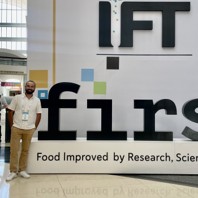
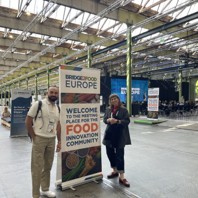
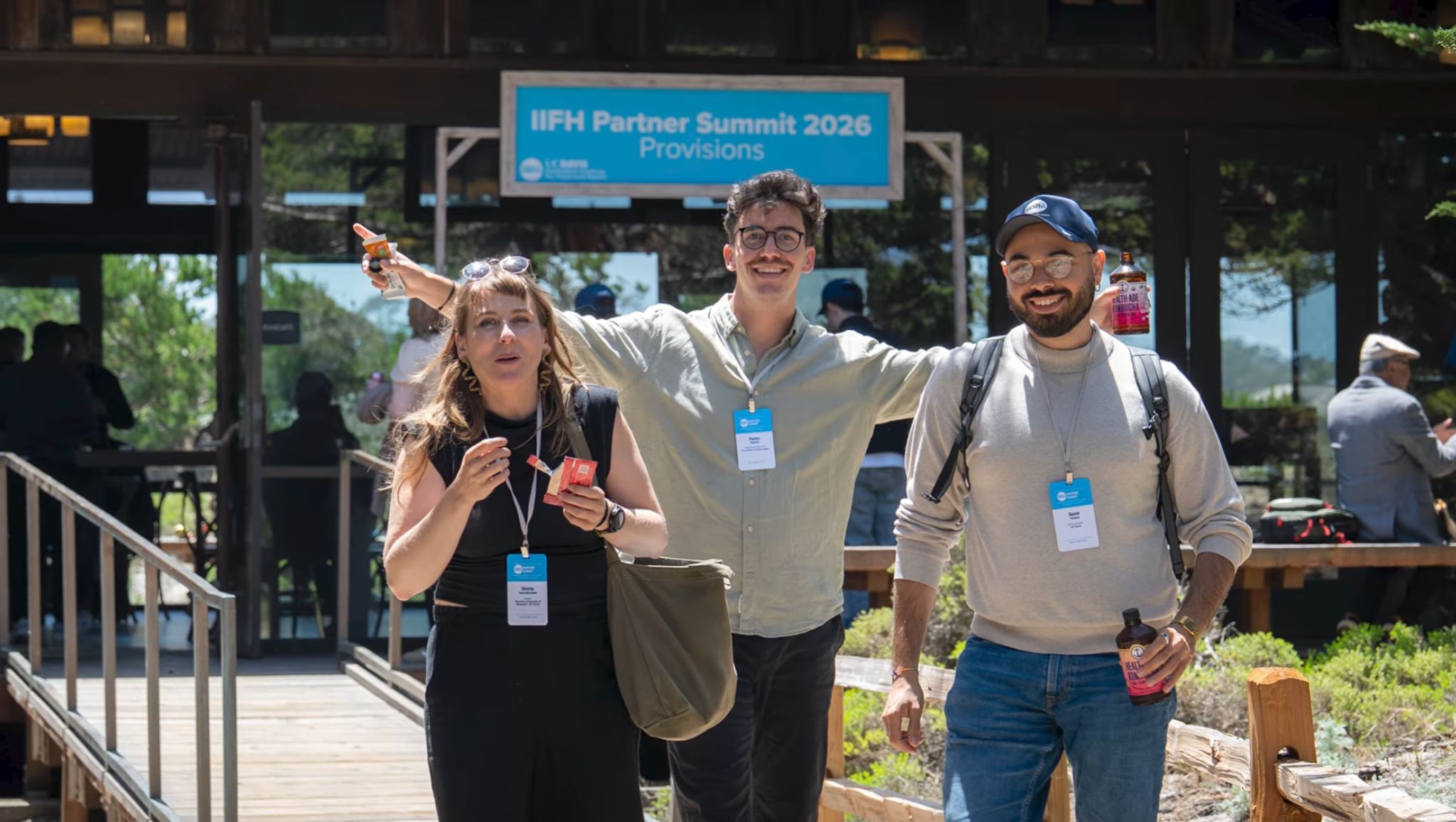
At the same time, attending conferences such as Future Food-Tech, IFT FIRST, Bridge2Food Europe, the Sustainable Foods Summit and the IIFH Partner Summit allowed me to see many of those same trends playing out in real time. The research gave us a framework, while the conferences showed us the companies, investors and ideas behind it.
The networking side of the fellowship was equally important. Repeatedly meeting founders, investors, researchers and industry professionals made me realize how much innovation depends on relationships as well as ideas. Some of the most useful conversations happened outside formal meetings, after a panel, between conference sessions, or simply through meeting the same people again in different settings.
The people
Beyond the professional experience, the people became a much bigger part of the fellowship than I expected. Sharing the six months with Emma and Pedro, meeting mentors, founders, investors and researchers, and building friendships along the way made the experience much more than a professional program. Some of the conversations I will remember most happened over dinners, during trips, between conference sessions or simply while exploring California together. Those relationships are also part of what I hope to carry forward from the fellowship.
What comes next
I also had the opportunity to apply some of what I had learned to my own research, by carrying out a preliminary techno-economic assessment of producing vegan vitamin D3 from microalgae. The conclusion was that the project is not currently ready to become a commercial opportunity. But being able to reach that conclusion systematically was itself valuable. I now have a much clearer framework for evaluating when research may have innovation potential and what would need to change for that potential to become realistic.
More than anything, the fellowship changed the way I see my own career. I want my next steps to bring me closer to the interface between science and innovation. After many years in academia, I want to gain experience in industry and better understand how ideas move from research into products, companies and real-world applications. My scientific background is a foundation; what I want to build on it is a stronger understanding of strategy, commercialization and the decisions that determine whether an innovation succeeds.
I did not leave California with a company or a perfectly defined five-year plan. I left with something more useful: a much clearer direction, a new network and a completely different set of questions to ask.
The fellowship opened a door between two worlds that had previously felt quite separate to me. My goal now is to keep walking between them.